Pedal Sinks Lower
A pedal that travels further after a long run often means the fluid has absorbed moisture and started to boil. Vapour bubbles compress, so the pedal feels long and soft until the system cools.
Our brake pad replacement in Abu Dhabi starts with measured pad, disc and fluid readings, then a written quote at up to 30% below main dealer rates.
5-star on Google · 87 reviews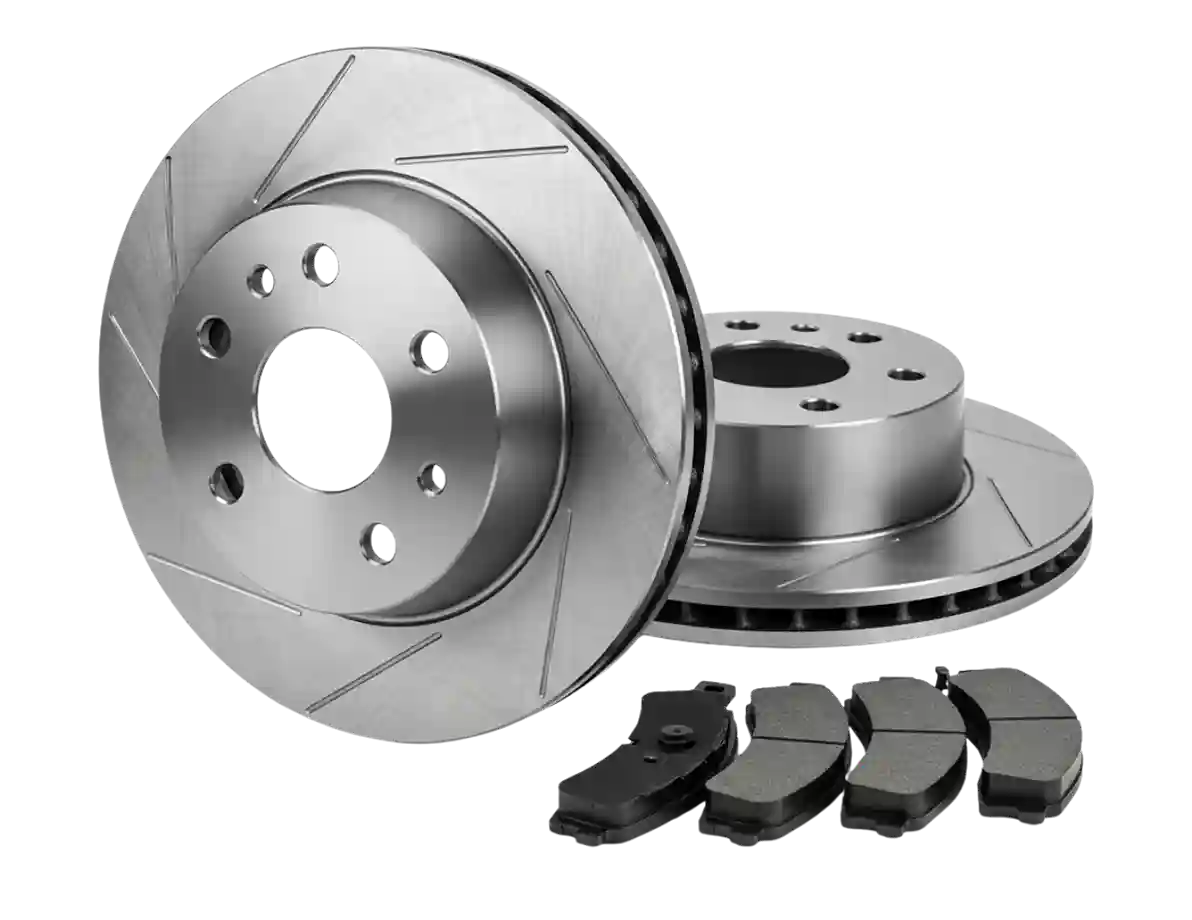
The facts
The E22 between Al Nahda and Bani Yas still runs at 140 km/h after the February 2026 limit changes. Braking energy grows with the square of speed, so a stop from 140 km/h turns almost twice as much energy into pad and disc heat as a stop from 100 km/h. On a 46 °C August afternoon the parts start hot and fade sooner, which is why brake pad replacement in Abu Dhabi starts with measured readings of pads, discs and fluid.
Know the signs
A pedal that travels further after a long run often means the fluid has absorbed moisture and started to boil. Vapour bubbles compress, so the pedal feels long and soft until the system cools.
A sharp, hot smell after slowing for an interchange comes from overheated pad resin. One episode can glaze the surface and leave the pads with less grip from then on.
Vibration through the wheel when braking from 120 km/h points to uneven disc thickness. Heat spots and pad deposits build up on the disc face after hard stops.
Glazed pads and tired fluid add metres to every emergency stop. Drivers often notice it first when traffic ahead slows suddenly on the E22 or E11.
A blue or dark straw tint on the disc face shows it has run extremely hot. That disc often has hardened spots, so we measure it before fitting new pads.
Pad wear rarely happens alone, so every brake pad replacement in Abu Dhabi we carry out includes the parts that share the heat. Our full brake service in Musaffah covers the 7 jobs below.
New pads carry about 10 to 12 mm of friction material, and most makers advise replacement at about 3 mm. We fit genuine or OEM pads matched to your car and clean every slide point.
We replace discs in axle pairs when they fall below the minimum thickness stamped on their edge or show heat cracks. If a disc is still above minimum and running true, we skim it instead.
DOT 4 fluid boils at 230 °C when fresh but only 155 °C once it holds about 3.7% water. We test the water content at every visit and flush the full system when it reaches about 3%.
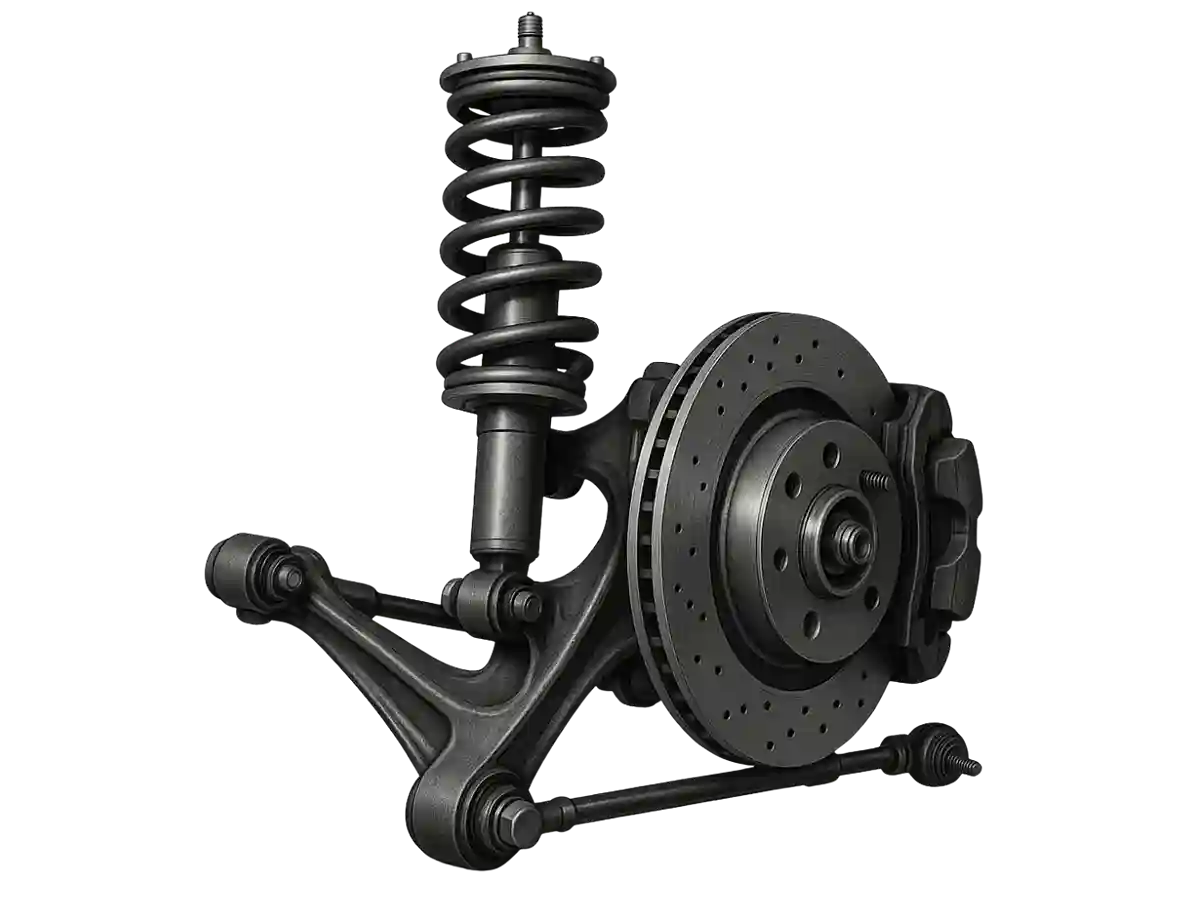
A sticking piston drags the pad, overheats the disc and pulls the car sideways. We rebuild calipers with new seals and boots, or fit new units where the bore is damaged.
Cars with an electronic parking brake must enter service mode before the rear pads come off. We retract the motors with diagnostic software and recalibrate them after fitting.
Wheel speed sensors sit beside the hub, where heat and grit wear their cables. A worn wheel bearing can also disturb the signal, so we test both before replacing anything.
Carbon ceramic discs and large multi piston calipers on cars such as Porsche and Lamborghini require their own pads and tools. Our Porsche repair team checks part numbers against the VIN first.
Abu Dhabi Police exempt vehicles under three years old from the technical check. Older vehicles need a pass at an ADNOC vehicle inspection centre, plus valid insurance and paid fines, before registration renewal through TAMM. We check the brake items that a roadworthiness test looks at, so your car goes in ready and you avoid a second visit.
Pad Thickness: We measure each pad at its thinnest point, inner and outer.
Disc Condition: We check thickness, scoring and cracks on both axles.
Handbrake Hold: We confirm the car holds firmly on a slope with the parking brake applied.
Brake Lights: We test every bulb, including the high level light.
Fluid and Lines: We look for leaks, a low reservoir and damaged hoses.
Step by step
Our technician drives the car to feel the pedal, listen for noise and note any pull. That baseline guides every measurement we take.
With the wheels off, we record pad and disc thickness at all four corners. You see the readings before any quote.
We read the water content in the reservoir with a digital tester. High readings mean a full flush, not a top up.
We fit new pads, sensors and discs where needed, and tighten every caliper bolt to your maker's torque figure.
We bed the pads into the discs with a set of controlled stops. This gives full grip and prevents early glazing.
We finish with a drive to confirm a firm pedal and straight stops. If the car pulls, we check its wheel alignment in Abu Dhabi before handover.
Every brake pad carries a friction edge code printed on its side, and we read it before fitting. The code follows the SAE J866 system: after the maker's code come 2 letters, the first for friction at normal working temperatures and the second for hot friction. A pad marked FF keeps the same grip band cold and hot, while a pad marked FE loses a band once it heats up. On a car that stops from 140 km/h on the E22, that second letter matters most.
| Edge Code Letter | Friction Coefficient | Grip Level |
|---|---|---|
| C | 0.15 or less | Very low |
| D | Above 0.15 to 0.25 | Low |
| E | Above 0.25 to 0.35 | Moderate |
| F | Above 0.35 to 0.45 | Strong |
| G | Above 0.45 to 0.55 | High |
| H | Above 0.55 | Very high |
The code rates friction only. It says nothing about noise, dust or stopping distance on a given car, so we still match each pad to the part number your maker lists.
Ceramic fibres and non ferrous metal flakes keep friction steady across a wide temperature band. They run quietly and dust lightly, which suits most sedans and luxury cars on Abu Dhabi commutes.
Steel fibres make up a large share of a semi metallic pad, and that metal carries heat away from the friction face. They suit heavy SUVs and towing, and they wear discs faster and squeal more.
Low metallic pads mix a small share of metal into an organic base. Many European makers fit them for strong bite from cold, at the cost of more dark dust on the wheels.
Once the lining runs far past its working temperature, the resin binder in a pad starts to break down and release gas. That gas lifts the pad off the disc, and grip can fall sharply until the pad cools.
Brake fluid absorbs water from the air, and every drop of water lowers its boiling point. The wet figures in the table assume about 3.7% water, a level old fluid reaches after years in service. Viscosity at minus 40 °C shows how quickly the fluid flows through ABS and stability control valves, and a lower figure means a faster response.
| Fluid Grade | Minimum Dry Boiling Point | Minimum Wet Boiling Point | Maximum Viscosity at Minus 40 °C |
|---|---|---|---|
| DOT 4 | 230 °C | 155 °C | 1,800 mm²/s |
| ISO 4925 Class 6 | 250 °C | 165 °C | 750 mm²/s |
| DOT 5.1 | 260 °C | 180 °C | 900 mm²/s |
| ISO 4925 Class 7 | 260 °C | 180 °C | 750 mm²/s |
Class 6 and Class 7 fluids also meet DOT 4, and some newer cars specify one of these low viscosity grades. DOT 5.1 shares the same glycol base as DOT 4, so the two mix safely, while silicone DOT 5 never goes into a DOT 4 system. We fill only the grade named in your handbook or on the reservoir cap, and we record it on your job card.
We compare the energy your brakes absorb on familiar roads near Musaffah, based on a stop from the posted limit against a stop from 100 km/h. The E22 and E30 limits changed on 9 February 2026. Abu Dhabi Mobility then cut a stretch of the E311 from 120 to 100 km/h in both directions on 14 September 2026, as Khaleej Times reported.
| Road Section | Current Limit | Braking Energy Compared With 100 km/h | Main Brake Concern |
|---|---|---|---|
| E22, Al Nahda to Bani Yas | 140 km/h (was 160) | About 1.96 times | Fade and fluid boiling on repeated hard stops |
| E22, Bani Yas to Bridge Complex | 120 km/h (was 140) | About 1.44 times | Disc heat during summer traffic slowdowns |
| E311, At Turoush St to Al Khayr St interchange | 100 km/h (was 120) | Baseline | Steady pad wear at interchanges |
| E30 Al Rawdah Road beside Musaffah | 100 km/h (was 120) | Baseline | Frequent slowing near exits and service roads |
| Old E22 limit, before February 2026 | 160 km/h | About 2.56 times | Shows how much heat older pads once handled |
A pad that coped with daily E22 runs at 160 km/h has worked very hard, even if its thickness still looks fine. Repeated heat cycles glaze the friction surface and age the fluid, so we measure both, not just the lining depth.
Abu Dhabi recorded 123 road deaths in 2024 (MoI), the second highest total in the UAE after Dubai. Crashes cost the emirate Dh5.2 billion in 2025, while the fatality rate fell to 3.11 deaths per 100,000 residents, according to the Integrated Transport Centre. Pads, discs and fluid in good condition are the simplest protection a driver controls, and we measure all three on every car.
Why 800 Exotic
You see pad, disc and fluid measurements before any price. We back each recommended part with a reading, so nothing gets replaced on guesswork or habit.
We fit only genuine or OEM pads, discs and sensors, and your invoice names the source. Your car keeps the stopping feel its maker designed, at every corner.
We charge up to 30% less than main dealer pricing for genuine brake parts and labour. The written quote you approve is the price you pay, with no surprises.
Our MOIAT certified mechanics carry out every brake job. They work to published torque figures, bleed sequences and service mode procedures for each make and model we handle.
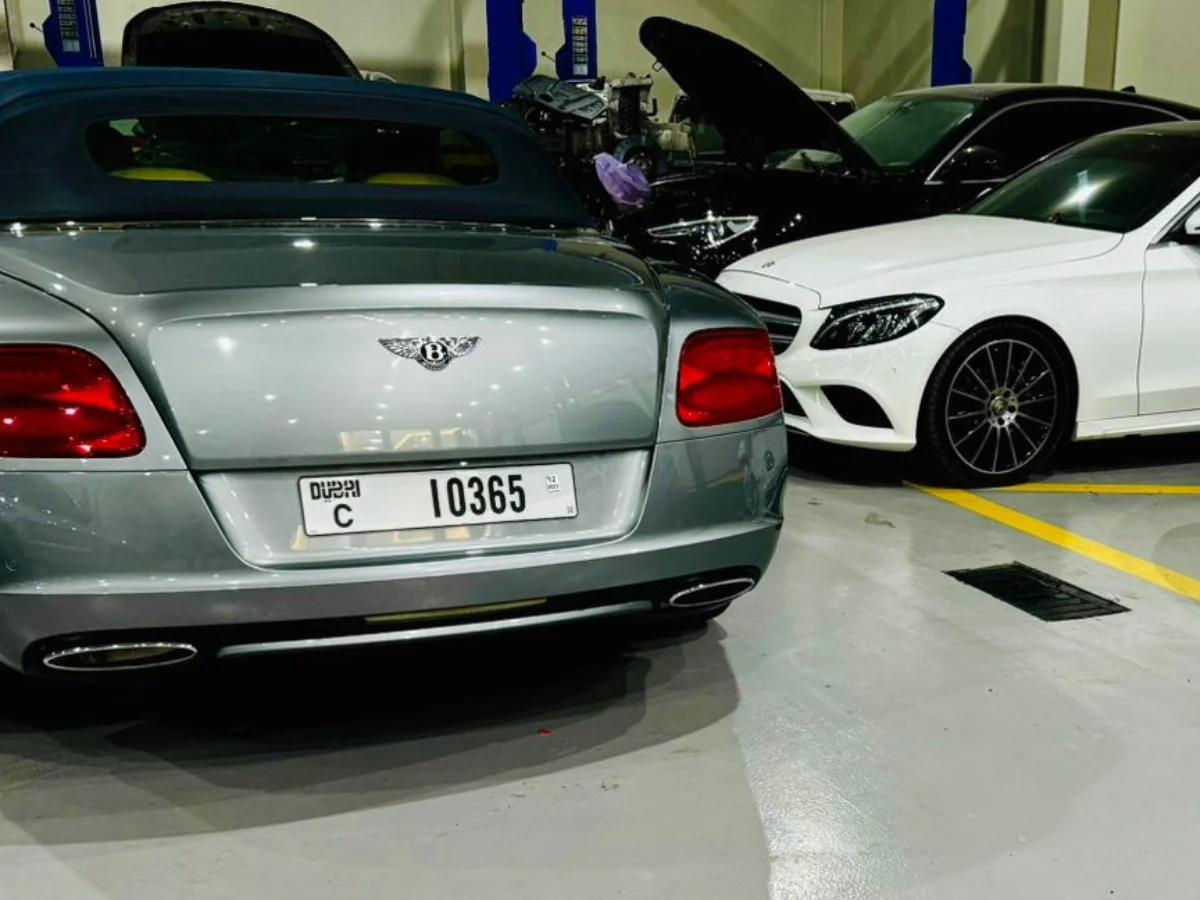
We keep a car with a soft or grinding pedal off the road. Our car recovery trucks bring it to Musaffah safely, and we collect for free on routine visits.
Our Google rating is 5.0 from 87 reviews, all five stars. We have repaired more than 50,000 vehicles over 15 years and back each repair with a written warranty.
Abu Dhabi · Musaffah
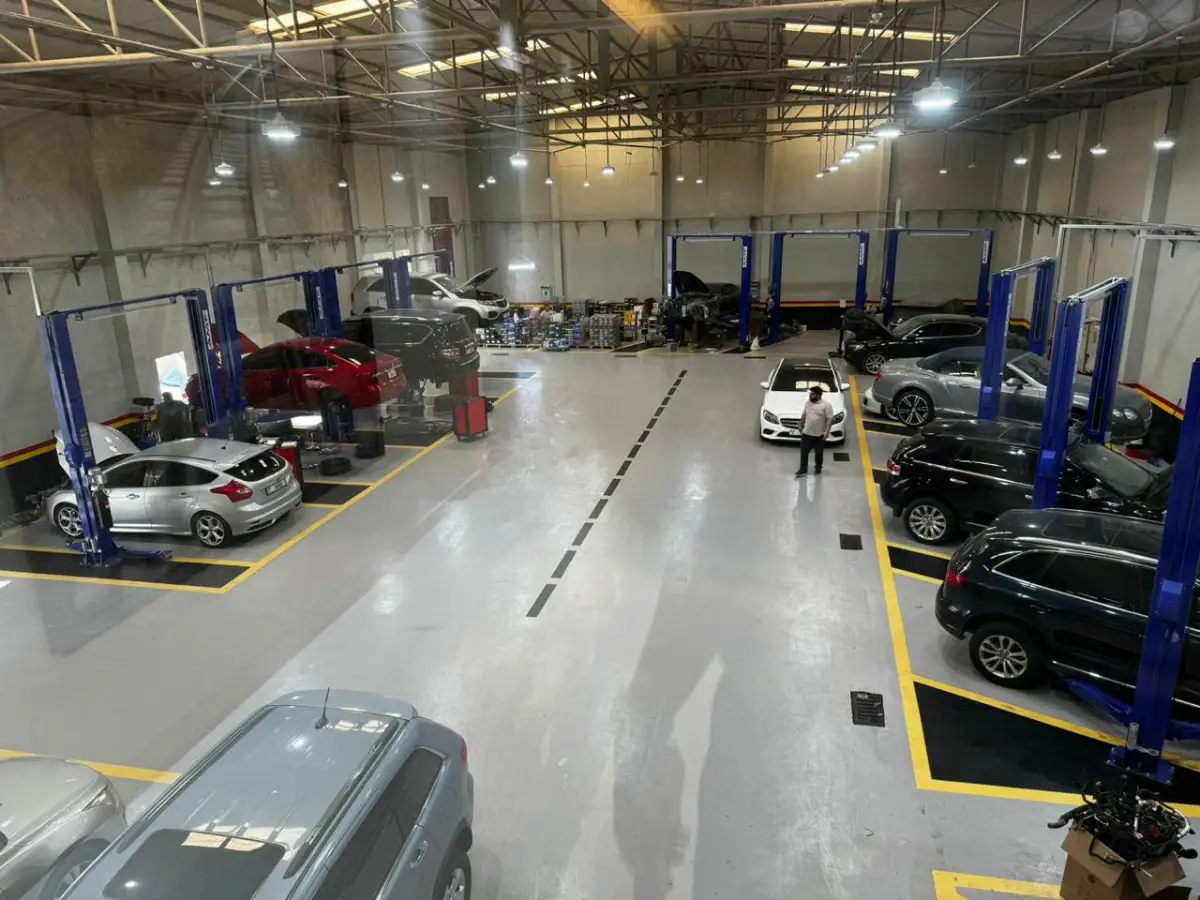
Our brake bays sit on Al Hasheemah 4 St in Musaffah Industrial, beside the E30 Al Rawdah Road, which now runs at 100 km/h. MBZ City is about 12 minutes away off peak, Khalifa City about 17 minutes and Shakhbout City about 22 minutes. Bani Yas via the E22 and Al Shamkha via the E20 are 20 to 30 minutes out. Al Reem Island, the Corniche and Yas Island are about 25 to 30 minutes away, and we collect from all of them for free for routine brake work.
If you commute along the E11, you can also book a brake pad replacement in Dubai at our Al Quoz head office. When the pedal feels unsafe, we send a recovery truck rather than let you risk the drive. Brakes are one part of the full car repair in Abu Dhabi we carry out from the same workshop.
Find our Musaffah workshop on Google Maps DubaiAl Quoz
 Abu DhabiMusaffah
 SharjahIndustrial Area 10
Send us your make, model and a short voice note of the noise on WhatsApp, and we prepare the right pads before your Musaffah visit.
Answers
There is no fixed distance, because highway speed, heat and driving style vary so much. New pads carry about 10 to 12 mm of material, and most makers advise replacement at about 3 mm, so we measure them at every service.
Yes. A stop from 140 km/h releases about 1.96 times the energy of a stop from 100 km/h, against 2.56 times from the old 160 km/h limit. Less heat per stop means slower pad wear and less fluid ageing.
Fade comes from two sources: pads that overheat and lose grip, and fluid that boils once it absorbs moisture. High ambient heat leaves less margin for both, so old fluid and glazed pads fade sooner in August.
The 2 letters at the end of the edge code rate the pad's friction, the first at normal working temperature and the second when hot. FF means the pad stays in the 0.35 to 0.45 band at both temperatures, which suits fast highway stops.
Vehicles three years and older need a technical check pass before registration renewal. We check for worn pads, a weak handbrake or a failed brake light beforehand, so your car passes at the first attempt.
We usually finish one axle in about an hour, including cleaning, bedding and a road test. Adding new discs, a fluid flush or electronic parking brake work extends the job to two or three hours.
Yes. Carbon ceramic discs cannot be skimmed and require a pad compound made for that material. We check part numbers against the VIN, so cars such as Porsche, Ferrari and Lamborghini keep their original braking feel.
5-star rated on Google
Every one of our 87 Google reviews is 5 stars. Read what owners say about their repairs, then see the full list on our Google profile.
Offering a full range of services, state-of-the-art equipment, and years of experience, we promise the finest care for your vehicle.