Uneven Inner Pad Wear
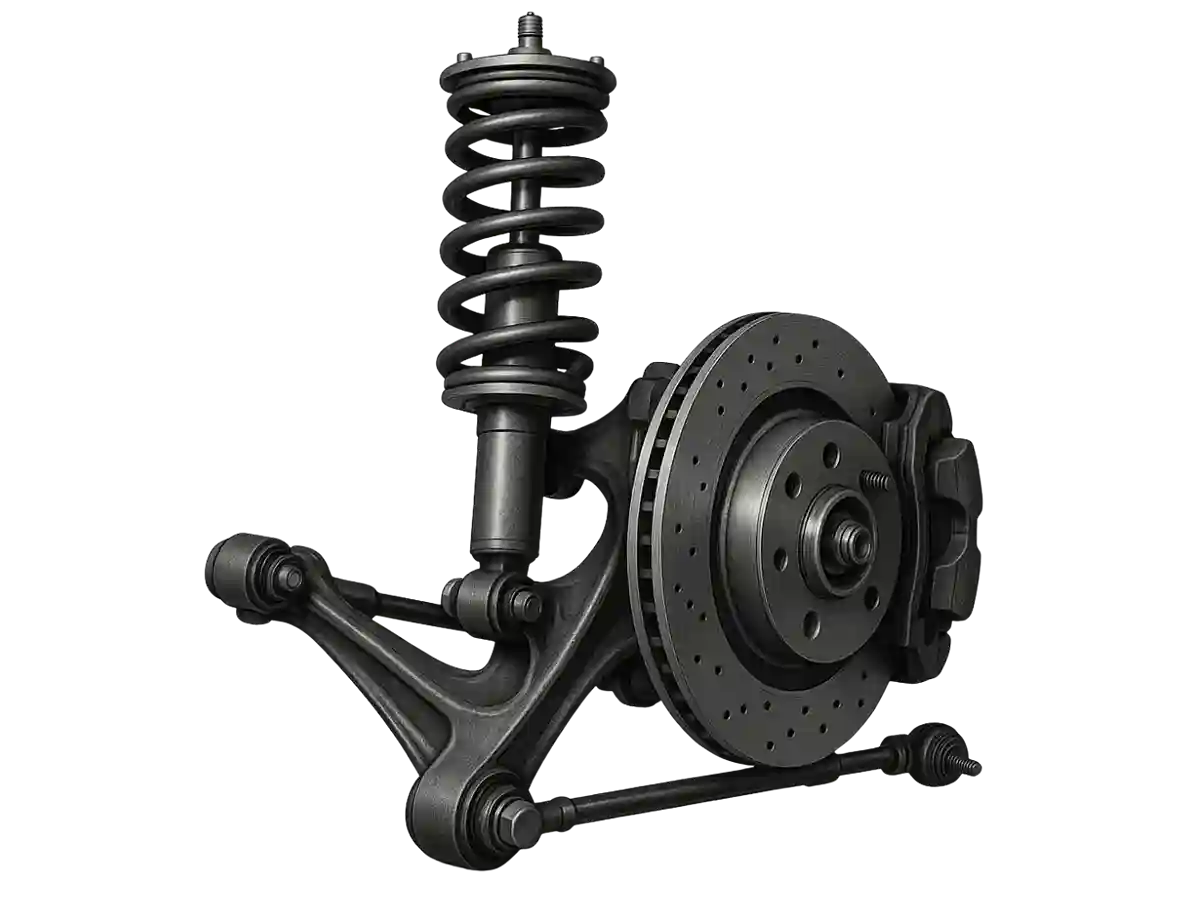
The inner pad wears faster when the caliper slide pins stick. Dust and moisture dry out the grease, so the caliper stops floating. The outer pad then looks healthy while the inner one is down to metal.
Our brake pad replacement in Sharjah measures every pad and disc before quoting, then fits genuine or OEM parts at up to 30% below main dealer prices.
5-star on Google · 87 reviews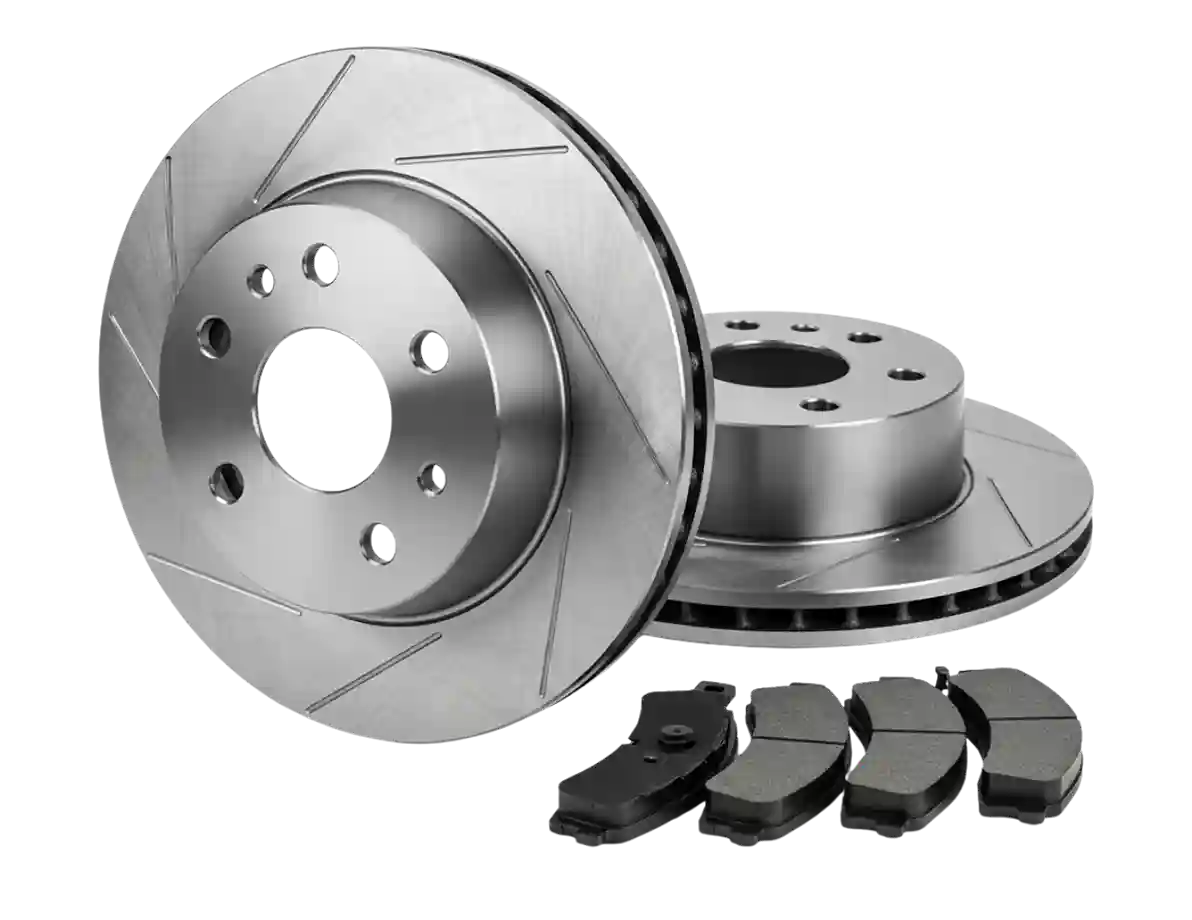
The facts
A June 2025 survey by RoadSafetyUAE and Al Wathba Insurance found that 90% of Sharjah residents regularly hit traffic jams, as Gulf News reported. Every jam means a long series of short stops, and each one scrapes the pads and sends heat into the discs. Over a year, that wears brakes faster than steady highway driving over the same distance.
The front axle takes most of the work, because weight shifts forward under braking. Front pads on Sharjah commuter cars often reach the 3 mm limit well before the rear, so brake pad replacement in Sharjah usually starts at the front.
Know the signs
The inner pad wears faster when the caliper slide pins stick. Dust and moisture dry out the grease, so the caliper stops floating. The outer pad then looks healthy while the inner one is down to metal.
Light, constant braking in a crawling queue never lets the pads reach their working temperature evenly. Resin rises to the surface and hardens into a shiny glaze. Glazed pads squeal at low speed and grip less in an emergency.
The pad sweeps only part of the disc, and the unswept outer edge forms a raised lip as the face wears. New pads fitted against that lip touch the disc unevenly and make noise. A lip usually means the disc is near its minimum thickness.
The April 2024 storm left Al Nahda, Al Qasimia, Abu Shagara and Al Majaz still being pumped out a week later, and one Al Khan shop had more than a metre of water outside. Cars that stood in that water often show pitted discs, seized caliper pistons and rusted brake lines. ABS sensor connectors corrode too, and we read the fault codes with car computer diagnostics.
Brake fluid absorbs moisture from humid air over time, and Sharjah summer nights are often very humid. Wet fluid boils at a much lower temperature. Repeated stops on a 46 °C afternoon push wet fluid closer to that point, and the pedal starts to feel soft.
We start each service with measurements, and our quote lists every part with its source.
Front pads do most of the stopping in city traffic. New pads carry about 10 to 12 mm of friction material, and we replace them at about 3 mm with genuine or OEM pads, new wear sensors where the car uses them, and clean, greased contact points.
Rear pads wear slower but often hide an electronic parking brake. We put the system into service mode with diagnostic software before retracting the pistons, then recalibrate it.
If a disc is above its stamped minimum thickness with light scoring or a small lip, we skim it on a lathe. Skimming removes the uneven surface for less than the cost of new discs.
We remove, clean and regrease the slide pins with high temperature grease and fit new boots. This one job often cures uneven inner pad wear for good.
We test the water content at every visit. At about 3% we flush the whole system with the grade in your handbook, usually DOT 4, and bleed each corner in sequence.
Steel brake lines rust along the chassis, especially on cars that sat in floodwater. We replace corroded sections with correct fittings and pressure test the circuit.
We use the table below to turn each measurement into a clear recommendation. You see the reading and the decision side by side on your job card.
| What We Measure | Reading | Our Recommendation |
|---|---|---|
| Pad friction thickness | Well above 3 mm and wearing evenly | Keep and recheck at the next service |
| Pad friction thickness | About 3 mm or less | Replace the axle set |
| Inner versus outer pad | Clear difference in thickness | Replace pads and service the slide pins |
| Disc thickness | Above the stamped minimum, running true | Reuse or skim |
| Disc thickness | At or below the minimum | Replace discs in axle pairs |
| Disc surface | Light surface rust that clears after a few stops | Keep, no action needed |
| Disc surface | Deep pitting or flaking after standing water | Replace discs and inspect the calipers |
| Fluid water content | About 3% or more | Full flush and bleed |
Step by step
We note the noise, pedal feel or pull you describe, then confirm it on a short road test.
With the wheels off, we record pad thickness inside and out, plus disc thickness and lip height.
We give you the readings and a written price before we order or fit any part.
We fit the new parts, grease the slide pins and tighten every bolt to the maker's torque value.
We bed the pads into the discs with controlled stops, then confirm a firm pedal and quiet, straight stops on a final road test.
Modern cars track pad wear electronically and clamp the rear brakes with electric motors, so a pad change involves software as well as spanners. We handle each of the 4 systems below on every brake pad replacement in Sharjah where the car uses them.
Many cars without a dash wear warning use a thin spring steel tab on the pad backing plate. Once the lining wears down, the tab touches the disc and squeals at low speed. We treat that squeal as a replacement call, not a noise to ignore.
Many German and British cars use a wire loop moulded into a plastic sensor, usually clipped to one pad on the axle. When the disc wears through the loop, the circuit opens and a warning shows on the dash. A worn sensor cannot be reused, so we fit a new one with the pads.
BMW Condition Based Service and similar systems estimate the distance left on each pad set. After fitting new pads, we reset the brake item with a scan tool, so the dash shows a true figure rather than a stale warning.
Most electronic parking brakes use a motor and spindle inside the rear caliper. Forcing the piston back by hand fights that gear and can strip it or damage the motor. We open the system in service mode with diagnostic software, fit the pads and then let the brake relearn its clamp position.
Each brake disc carries its own limit, stamped as MIN TH followed by a value in millimetres. We measure at 4 or more points and take the lowest reading as the true figure. Below that limit, both discs on the axle get replaced, even if only one has worn through.
Runout is the side to side wobble of the disc as it turns. We check it with a dial gauge, and typical limits sit at only about 0.05 to 0.075 mm. Excess runout wears the disc unevenly over time and leads to judder.
When one part of the disc is thicker than another, the pedal pulses under braking. A difference of only about 0.013 mm can cause that pulse, so we measure with a micrometer, not by eye.
We skim a disc only when its thickness after machining still sits above MIN TH. Carbon ceramic discs and discs with heat cracks never go on the lathe. As a rule, discs come due at about every second pad change, and our readings confirm when that point arrives.
Pad wear in Sharjah depends more on how often you stop than on how fast you drive. A crawling queue asks for dozens of short stops in a few kilometres, and every one scrapes a little friction material off the front pads.
The June 2025 jam survey polled 1,021 residents, and only Dubai scored higher than Sharjah, at 91%. A commute that stops and starts all the way to the border wears pads faster than a longer, steady run.
Sharjah cut Al Wahda and Al Ittihad roads, between the Abu Shaghara interchange and Al Taawun Bridge, from 100 to 80 km/h in May 2024, as Gulf News reported. The Dubai side of Al Ittihad Road, from the Sharjah border to Al Garhoud Bridge, has run at 80 km/h since November 2023. Lower speeds cut the energy in each stop, yet the number of stops keeps pad wear high.
Driving style decides how long pads last in heavy traffic. These 4 habits reduce wear on the daily commute without adding time.
Keep a Wider Gap: A longer gap lets you roll off the throttle instead of braking for every brake light ahead.
Lift Off Earlier: On 80 km/h roads such as Al Ittihad Road, easing off early handles most slowdowns without the pedal.
Let Regeneration Work: Hybrid and electric cars slow mainly through the motor, which saves pads in queues.
Rinse Wheels After Rain: Washing off mud and standing water reduces rust on discs and slide pins.
Why 800 Exotic
You see every pad and disc reading before any price. We back each part we recommend with a measurement, written on your job card for you to keep.
We fit only genuine or OEM pads, discs and sensors, and your invoice names the source. Your car keeps the braking feel and wear life its maker intended.
We charge up to 30% less than main dealer pricing for brake parts and labour. The written quote you approve is the price you pay, even when we find extra cleaning to do.
We pick up and drop off for free across Sharjah on routine brake visits. If the pedal feels unsafe, we send a recovery truck rather than let you risk the drive.
We give a written warranty on parts and labour for each brake repair. If any noise or fault traces back to our work, we correct it at no charge, without long discussion.
Our MOIAT certified mechanics have repaired more than 50,000 vehicles over 15 years. Our Google rating is 5.0 from 87 reviews, all five stars.
Sharjah · Industrial Area 10
Our workshop in Sharjah Industrial Area 10 sits near the Dubai border. Al Nahda is about 7 km away by road, while Al Khan, Al Majaz and Al Taawun are 8 to 10 km, mostly via the S102. Muwaileh, University City and American University of Sharjah lie about 10 to 13.5 km east via the E311. Ajman City Centre is about 15 km via the E11, and Al Qusais in Dubai is about 11 minutes away off peak.
Phase 1 of the Al Taawun road project opened on 4 November 2026, with a 560 m tunnel toward Expo Centre Sharjah. We collect for free from all of these areas for routine brake work. If you work in Dubai, you can book a brake pad replacement in Dubai at our Al Quoz head office instead. Brakes are one part of the full car repair in Sharjah we carry out from Industrial Area 10.
Find our Industrial Area 10 workshop on Google Maps DubaiAl Quoz
 Abu DhabiMusaffah
 SharjahIndustrial Area 10
Send us your make, model and a short voice note of the noise on WhatsApp, and we have the right pads ready before you arrive.
Answers
There is no fixed distance, because stop and go traffic, driving style and pad compound all vary. Front pads on daily commuter cars wear fastest, so we measure them at every service and replace them at about 3 mm.
Yes. Cars that stood in floodwater often show pitted discs, sticking caliper pistons and rusted brake lines months later. We find these faults on a lift inspection, which is also part of any pre purchase inspection we carry out.
Yes. A thin orange layer after rain or a car wash is normal and clears after a few gentle stops. Rust that stays, deep pitting or flaking edges point to corrosion, and we then fit new discs and check the calipers.
Not always. A worn electronic sensor stays open until we replace it, and cars with service interval tracking keep the warning until we reset it with a scan tool. We do both as part of the pad change.
No. Rafid covers private Sharjah cars up to eight years old, inspected within the last 18 months, using photos that show no accident damage. A photo cannot measure pad thickness, so a hands on brake check still matters.
Low speed squeal usually comes from glazed pads, a worn wear indicator or missing anti noise shims. Grinding is more serious, because it means metal is touching the disc and the car needs attention straight away.
A loose caliper bracket can knock under braking, but a clunk often comes from worn control arm bushes or ball joints. If the brakes check out, our suspension repair in Sharjah team inspects the front end.
5-star rated on Google
Every one of our 87 Google reviews is 5 stars. Read what owners say about their repairs, then see the full list on our Google profile.
Offering a full range of services, state-of-the-art equipment, and years of experience, we promise the finest care for your vehicle.