Brake Inspection and Diagnosis
We measure pad thickness, disc runout and fluid moisture, then road test the car at several speeds. A written report shows what is urgent and what can wait.
Our brake pad replacement in Dubai starts with real measurements, not guesswork. We check pad thickness, disc condition and fluid health, then fit parts matched to your exact car model.
5-star on Google · 87 reviews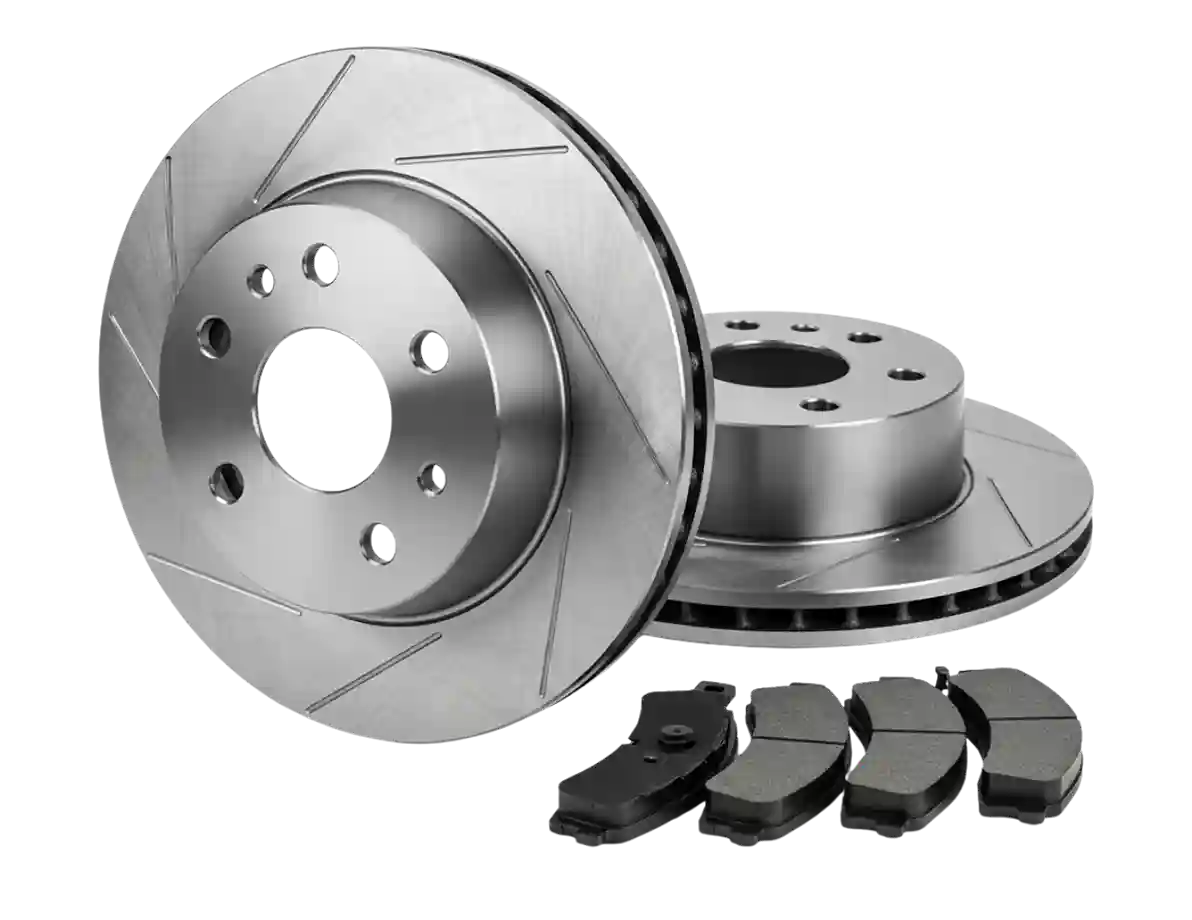
The facts
Each hard stop turns speed into heat at the disc face, and a busy commute repeats that cycle hundreds of times a week. New linings usually carry 10 to 12 mm of friction material, and most makers advise replacement once it falls to about 3 mm.
The hydraulic fluid ages too, because it absorbs moisture from the air. Under the US FMVSS 116 standard, fresh DOT 4 fluid must not boil below 230°C, yet the minimum drops to 155°C once it holds moisture. That gap explains why an old fluid can leave a soft pedal after a long mountain descent.
Know the signs
Match what you hear or feel to the cause in the second column.
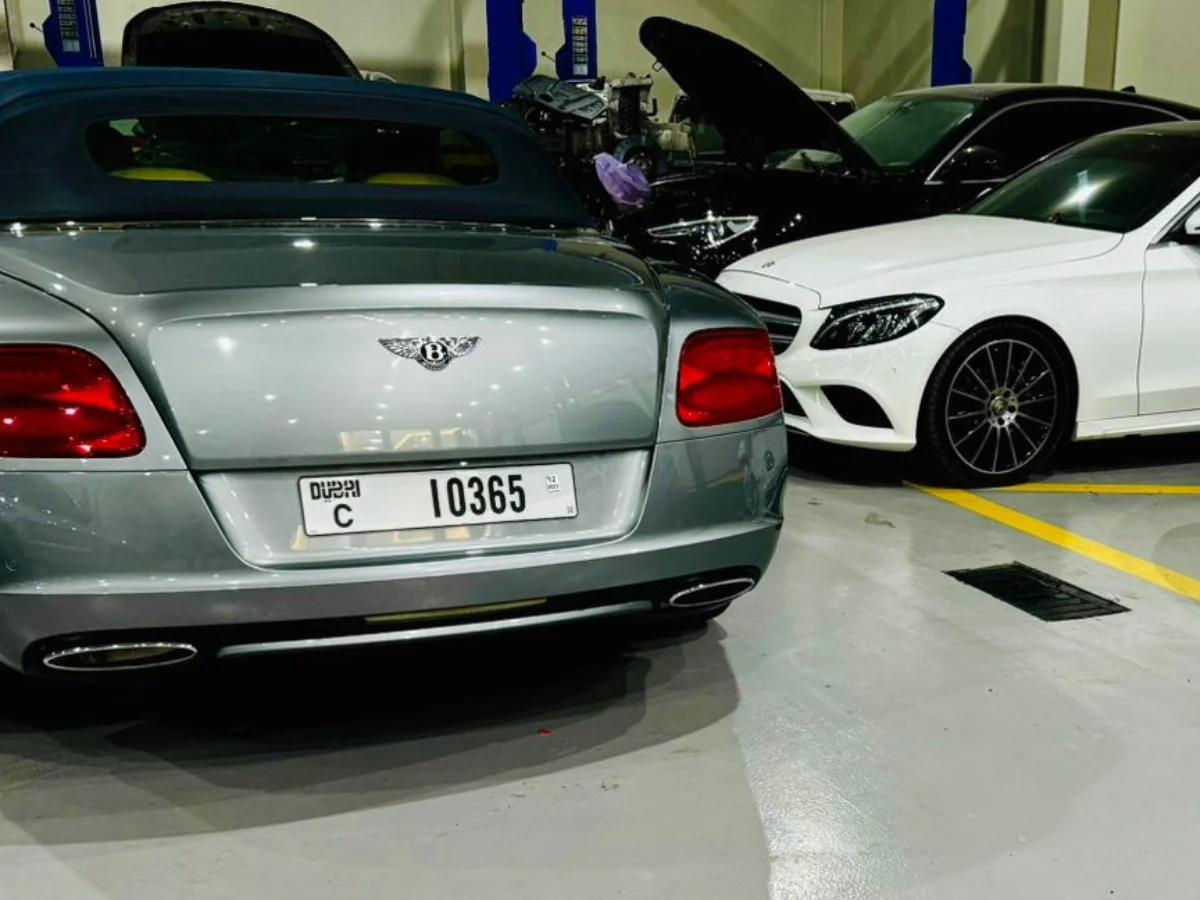
| Symptom | What Usually Causes It |
|---|---|
| High-pitched squeal when slowing | Wear indicator touching the disc, or glazed friction surfaces |
| Metal grinding noise | Friction material worn to the backing plate |
| Steering wheel shakes under braking | Uneven disc thickness or heavy deposits |
| Car pulls to one side | Sticking caliper or contaminated pad |
| Pedal sinks or feels spongy | Air in the lines, a leak or worn master cylinder seals |
| Pedal feels hard and needs extra force | Vacuum booster leak or faulty check valve |
| Red or amber dashboard light | Low fluid level, a tripped wear sensor or an ABS fault |
A pad change often uncovers worn discs, a sticking caliper or old fluid, and we fix each one on the same visit.
We measure pad thickness, disc runout and fluid moisture, then road test the car at several speeds. A written report shows what is urgent and what can wait.
Worn friction material loses grip and exposes the steel backing plate. We fit car brake pads matched to your model, clean the sliding hardware and bed them in.
Discs worn below the minimum thickness stamped on their edge, or cracked from heat, need replacing. We fit new rotors in axle pairs, so both wheels grip evenly.
When a disc still sits above its minimum thickness, a lathe cut removes uneven deposits and light scoring. This often cures pedal vibration for less than new discs.
Many SUVs and pickups use drums at the rear or inside the parking mechanism. We replace worn shoes, return springs and adjusters, then set the correct drum clearance.
Drums wear oval or develop deep grooves over thousands of kilometres. We machine them when the inner diameter stays within limit and replace them when it does not.
A sticking piston drags the lining, overheats the wheel and pulls the car sideways. We rebuild calipers with new seals and boots, or fit remanufactured or new units.
Sticky, corroded guide pins make the inner and outer linings wear unevenly. We clean the bores, replace torn boots and apply high-temperature grease so the caliper floats freely.
Old fluid absorbs moisture and steadily loses heat resistance. We flush every corner of the system and refill with the grade your maker specifies, usually every two years.
Trapped air compresses easily and makes the pedal spongy. We bleed each wheel in the correct sequence, using a pressure bleeder or scan tool where ABS needs cycling.
Rubber hoses crack and swell with age, while steel lines rust along the exposed chassis. We swap damaged sections using correct fittings, then pressure test the whole circuit.
A pedal that slowly sinks under steady foot pressure usually points to worn internal seals. We replace the master cylinder, bench bleed it first and recheck pedal height.
A hard pedal plus hissing under the dashboard often means a leaking vacuum booster or failed check valve. We test vacuum supply first, then replace the faulty part.
A leaking wheel cylinder soaks the drum shoes with fluid and ruins their grip. We replace the cylinder, renew any contaminated shoes and then bleed the circuit fully.
A lever that climbs too far, or a car that rolls on a slope, needs attention. We adjust cables, free seized mechanisms and replace stretched or frayed cables.
Electronic systems must enter service mode before the rear linings come off. We use diagnostic software to safely retract the motors, replace faulty actuators and recalibrate everything afterwards.
Many German models use a wire sensor that breaks once the friction material wears to it. We fit a new sensor whenever needed and clear the stored warning.
An ABS fault switches off anti-lock and often the stability control too. Our car computer diagnostics read stored codes, then we test the wiring, modules and hydraulic pump.
Wheel speed sensors sit close to the hub, where dirt, heat and cable damage take their toll. We test output, clean the tone ring and replace faulty sensors.
A red light means low fluid or an applied parking lever, while amber flags worn pads or ABS faults. We trace the exact cause before replacing any part.
Squeal often comes from glazed linings or missing anti-noise shims, while grinding means metal touches metal. We remove the source with fresh hardware, new linings or replacement discs.
The friction material decides how your pads feel, how much dust they leave and how long they last.
Ceramic compounds run quietly, shed light-coloured dust and handle heat well. They suit most daily drivers and many luxury sedans, especially owners who dislike dark dust on alloys.
Steel fibres in the mix give strong bite and fade resistance under heavy loads. They suit SUVs and towing vehicles, though they create extra noise and more dust.
Common on European models, these pads blend a small amount of metal with organic material. They grip hard from cold, which suits spirited driving, but they dust more.
Soft organic compounds feel gentle and stay quiet, yet they wear faster and fade sooner under sustained heat. We fit them only where the vehicle maker specifies them.
This hydraulic fluid carries pedal pressure to the calipers, and your manual names the grade. "Wet" figures assume about 3.7% absorbed water.
| Grade | Base | Minimum Dry Boiling Point | Minimum Wet Boiling Point | Mixing Notes |
|---|---|---|---|---|
| DOT 3 | Glycol | 205°C | 140°C | Mixes with DOT 4 and 5.1 |
| DOT 4 | Glycol | 230°C | 155°C | The most common grade on European cars |
| DOT 5.1 | Glycol | 260°C | 180°C | Higher heat resistance, same family as DOT 4 |
| DOT 5 | Silicone | 260°C | 180°C | Never mix with glycol grades |
At every pad visit, we dip a digital tester into the reservoir to read its water content. When the reading reaches about 3%, we recommend a full flush rather than a simple top-up.
Fresh fluid goes in only to the specification printed in your handbook, so a DOT 4 system never receives silicone DOT 5. Your job card records the grade used and the date, which shows when the next change falls due.
High-end vehicles often carry parts that need specific knowledge. Carbon-ceramic discs fitted to some Porsche, Lamborghini, Ferrari and Mercedes-AMG models cannot be skimmed, and they need a friction compound designed for that material.
Large multi-piston calipers from suppliers such as Brembo also need the correct friction sets, shims and piston tools. We check part numbers against the vehicle identification number, so a performance car keeps its original stopping feel.
Step by step
The car goes on a lift, wheels come off, and we record pad and disc thickness on both sides of each axle.
We push each caliper piston back slowly, or use service mode on electronic parking systems, so seals and actuators stay undamaged throughout.
Rust and dust come off the caliper brackets and abutment clips. Fresh anti-squeal paste goes on every contact point that needs it.
New pads, sensors and discs where needed go in, and every caliper bolt gets tightened to the torque figure your maker publishes.
We top up or replace the fluid, test its moisture and confirm the pedal feels firm before the car leaves the lift.
A controlled road test beds the new pads into the discs. If the car pulls, we check its wheel alignment before handover.
Why 800 Exotic
Stopping parts protect lives, so the team you choose matters more than the price of a pad set.
One of the 50 MOIAT-certified technicians here records pad and disc readings before any quote, so you clearly see why each part is needed.
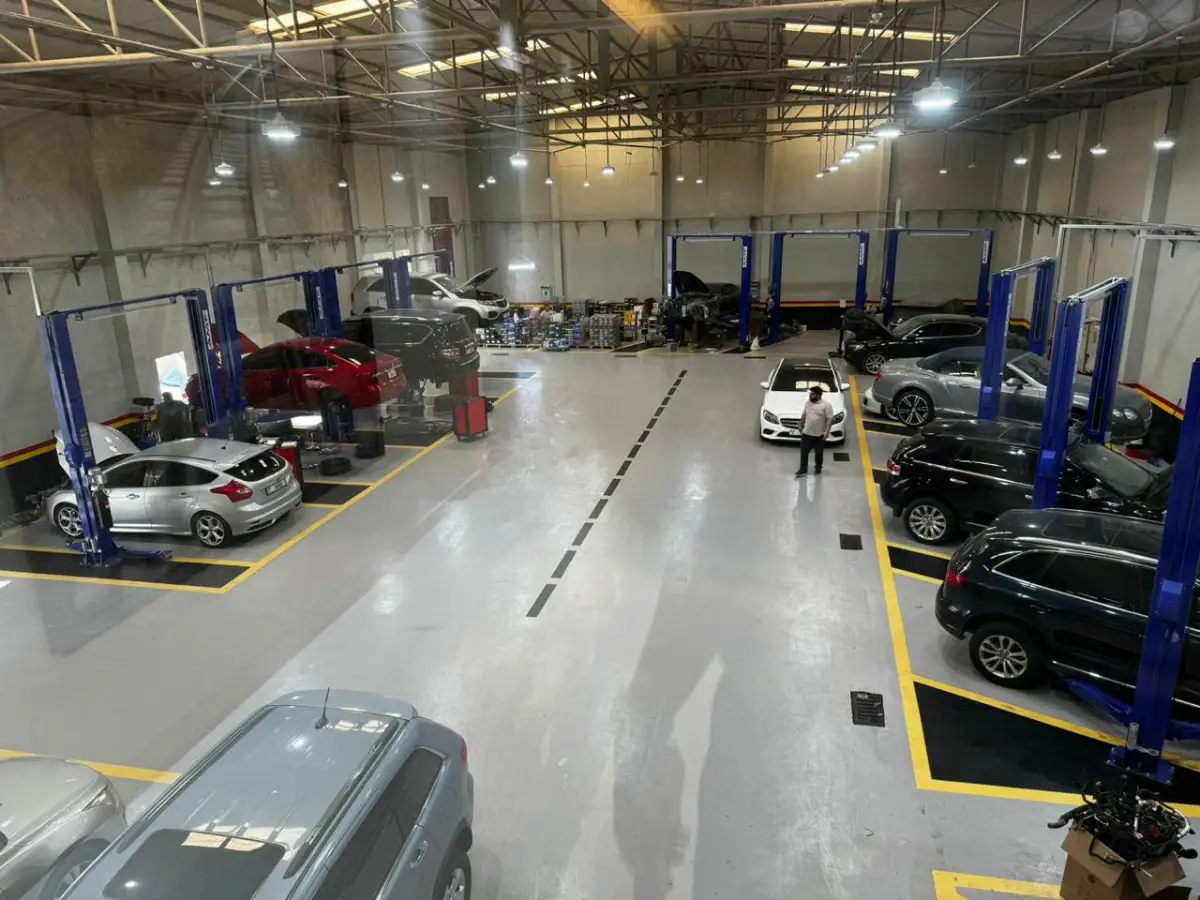
A front pad swap usually finishes within about one hour, while our 20+ hydraulic lifts mean your car rarely queues for a free bay.
Genuine or OEM front pads with sensors come in up to 30% cheaper here than the identical set from a main dealer's parts counter.
Accident damage to calipers, discs or ABS sensors can go through your policy, since we hold direct billing arrangements with more than 10 insurers.
More than 15 years of stopping-system work and over 50,000 vehicles serviced sit behind the 5.0★ Google rating built on 87 verified owner reviews.
Each repair carries a written guarantee covering both parts and labour. Free collection means you never drive the car while its stopping feels unsafe.
Look Further Ahead: Reading traffic early lets you lift off sooner and use the pedal less.
Use Engine Braking on Descents: A lower gear on roads like Jebel Hafeet keeps the whole system cooler.
Avoid Riding the Pedal: Resting a foot on the pedal keeps the linings in light contact and wears them silently.
Lighten the Load: Extra weight in the boot makes every stop work the friction material harder.
Keep Wheels Clean: Washing away dust and sand helps you spot uneven wear between the spokes.
Respect Bedding-In: Gentle stops during the first 300 km help new pads and discs settle evenly.
Dubai · Abu Dhabi · Sharjah
Our drivers pick up vehicles from homes and workplaces in Abu Dhabi, Dubai and Sharjah, then bring them back after sign-off. When the pedal feels unsafe, a recovery truck moves the car to the 30,000 sq. ft. Al Quoz facility, which handles about 120 vehicles a day. Send the make, model and a short voice note of the noise on WhatsApp, so the right parts are waiting.
Find our Al Quoz workshop on Google Maps DubaiAl Quoz
 Abu DhabiMusaffah
 SharjahIndustrial Area 10
Your pads and fluid do the hardest work of any part on the car, every single day. 800 Exotic measures first, explains every finding and fits only parts that match your model. Message us to book a brake pad replacement or car brake repair in Dubai. While the car is here, our team can check anything else it needs during one car repair in Dubai visit.
Answers
Not always. If the discs sit above their minimum thickness and run true, skimming or reusing them is fine. Badly scored, cracked or warped discs need replacing alongside the new pads.
A single axle usually takes about an hour, including cleaning and a road test. Adding new discs, a fluid flush or electronic parking work can extend that to two or three hours.
Weight shifts forward when you slow down, so the front axle handles most of the stopping force. Front pads often wear out twice as fast, although electronic stability systems can change that balance.
Normal stopping usually still works, but anti-lock protection is off and the wheels can lock in an emergency. Book a diagnosis soon rather than waiting for the next service.
Yes. Regenerative braking does much of the slowing, so pads often last far longer. Light use can let the discs rust, though, so we check their surfaces at every visit.
A loose caliper bracket can knock, but a clunk often comes from worn control arm bushes or ball joints. If the pads check out, our car suspension repair team inspects the front end.
5-star rated on Google
Every one of our 87 Google reviews is 5 stars. Read what owners say about their repairs, then see the full list on our Google profile.
Offering a full range of services, state-of-the-art equipment, and years of experience, we promise the finest care for your vehicle.